Write together
Type a quotation and Space finds its page. The agent drafts the section, cited.
Pages, tables, surveys, reviews and dashboards beside your Shamela library. You lead the research; the agent reads the books, builds and writes with you, and every quote stays tied to its page.
Type a quotation and Space finds its page. The agent drafts the section, cited.
The agent gathers a hadith’s routes in al-Daraqutni and shows its flaw.
Compare copies word by word, and the variants become your apparatus.
Ask for one, and the agent builds the table, views and charts.
Faraid for each school, with every step tied to its book and page.
Read a live survey summary and screen for PRISMA with the agent.
Open it from any page. It reads your chapters and data, builds what you ask for, and answers your supervisor in the page itself.
Share a page with a link, choose when it ends, and add an access code if you like. Your supervisor opens it in their own Space, and you write, comment and resolve on the same page at the same time.
HanaStudent
Dr. YusufSupervisor, in their own Space
Each cursor carries its owner’s name, and every letter appears the moment it is typed, on both screens at once.
Select a phrase to comment on it. Your supervisor replies in the same thread, and you resolve it once it’s fixed.
The relay passes on only ciphertext. The key stays in the link, and an access code adds a second lock.
Space reads each copy against your text and gives every difference a numbered note.
Run a survey, screen a review and code interviews with the agent, next to the books you cite.
The survey went to muftis and researchers in Malaysia and the Gulf. It opens with a consent step, and answers are published only in aggregate.
This survey asks muftis and researchers how far they rely on maslaha mursala in fatwas on transactions. It takes about four minutes.
responsesLast response:

 Reading by the agent
Records from three databases are screened by title and abstract against the protocol, then in full text.
Records identified from:
Databases (n = )
Records removed before screening:
Duplicates (n = )
Records screened (n = )
Records excluded (n = )
Reports sought for retrieval (n = )
Reports not retrieved (n = )
Reports assessed for eligibility (n = )
Reports excluded (n = )
Studies included in review (n = )
| Title | Source | Stage | Exclusion reason |
|---|
Six members of Shariah boards were interviewed. Each transcript is coded, and a second coder checks the coding.
When a new product comes to the board, we first ask whether a text addresses it. If none does, we look at the purposes of the law and what the product protects or harms.
We never use maslaha to set aside a clear prohibition. That is the line. Honestly, some boards are under pressure from the banks that pay them, and that is where maslaha gets stretched.
We also go back to the classical cases. Al-Ghazali accepts maslaha only when it is necessary, certain and general, and I think boards should still hold to those three conditions.
| Code | P1 | P2 | P3 | P4 | P5 | P6 | Total |
|---|
Type a quotation and Space finds it in your library, with its book and page.
Footnotes and the bibliography follow your citation style and update as you write.
Book, quotation, ayah, narrator, hadith grade and madhhab fields in every table.
Export to Word with real footnotes, or bring your Notion pages in.
Pages, tables and files are stored locally, inside Shamela Agent.
Ask from any page. Every change it makes keeps a version you can restore.
Explore what you can do, all on your computer.
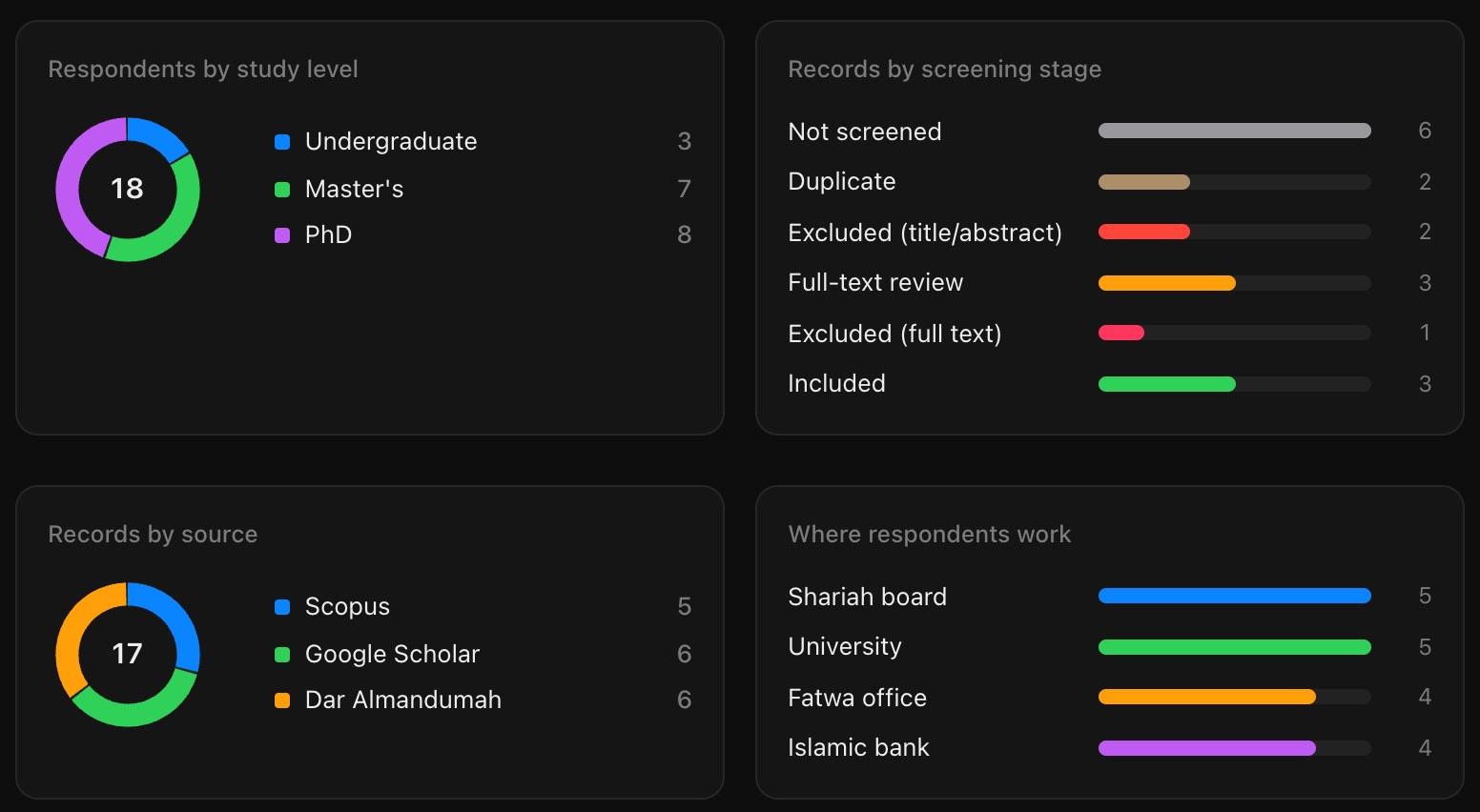
Charts and counts that update as responses and records come in.
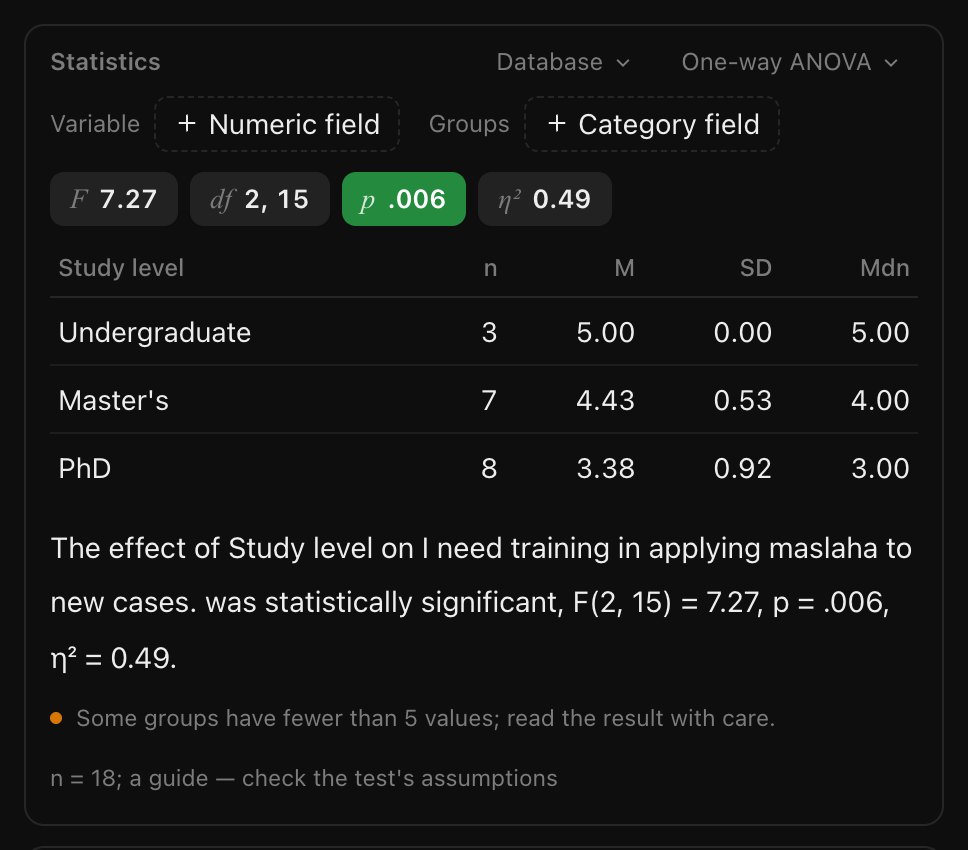
ANOVA, t-tests and correlation, written up APA-style.
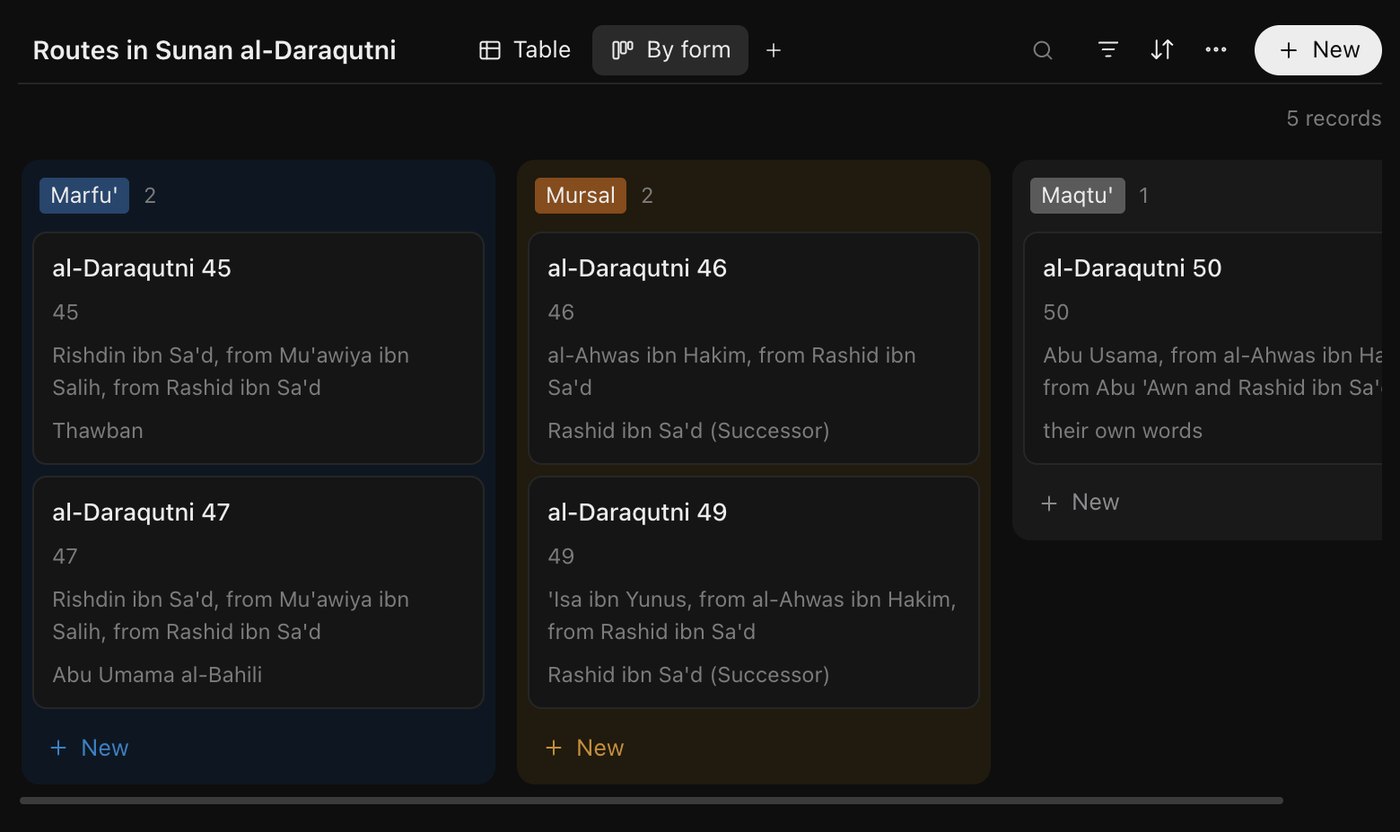
Routes grouped by form, marfuʿ, mursal or maqtuʿ, each card tied to its page.
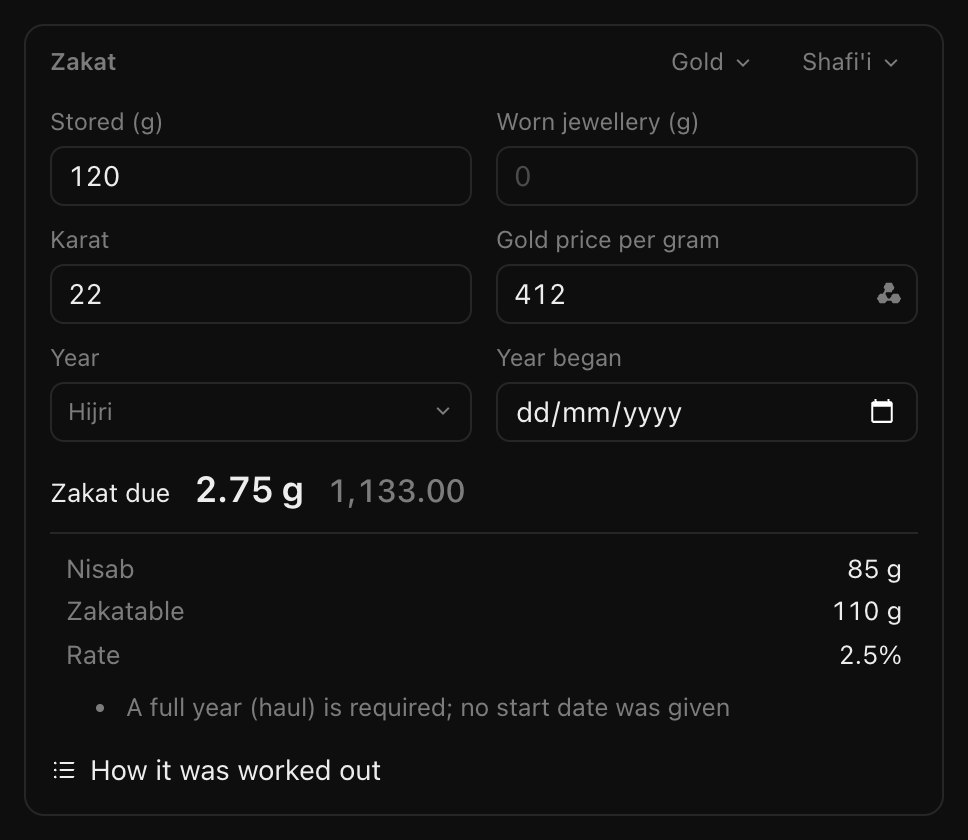
Gold, trade, crops or fitrah, with the nisab of your madhhab and each step shown.
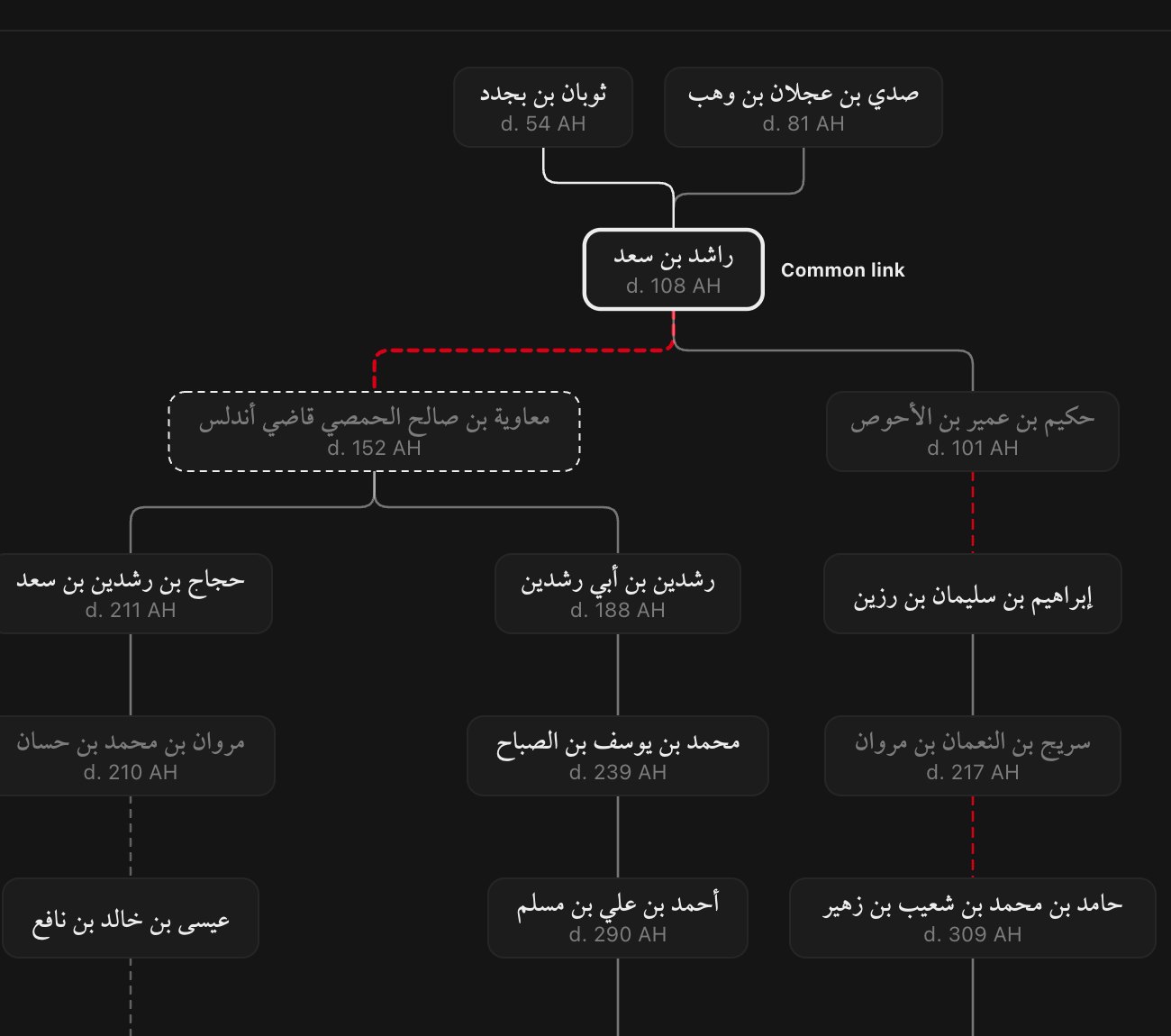
The chains on a page drawn as one diagram, with the common link and the doubtful links marked.
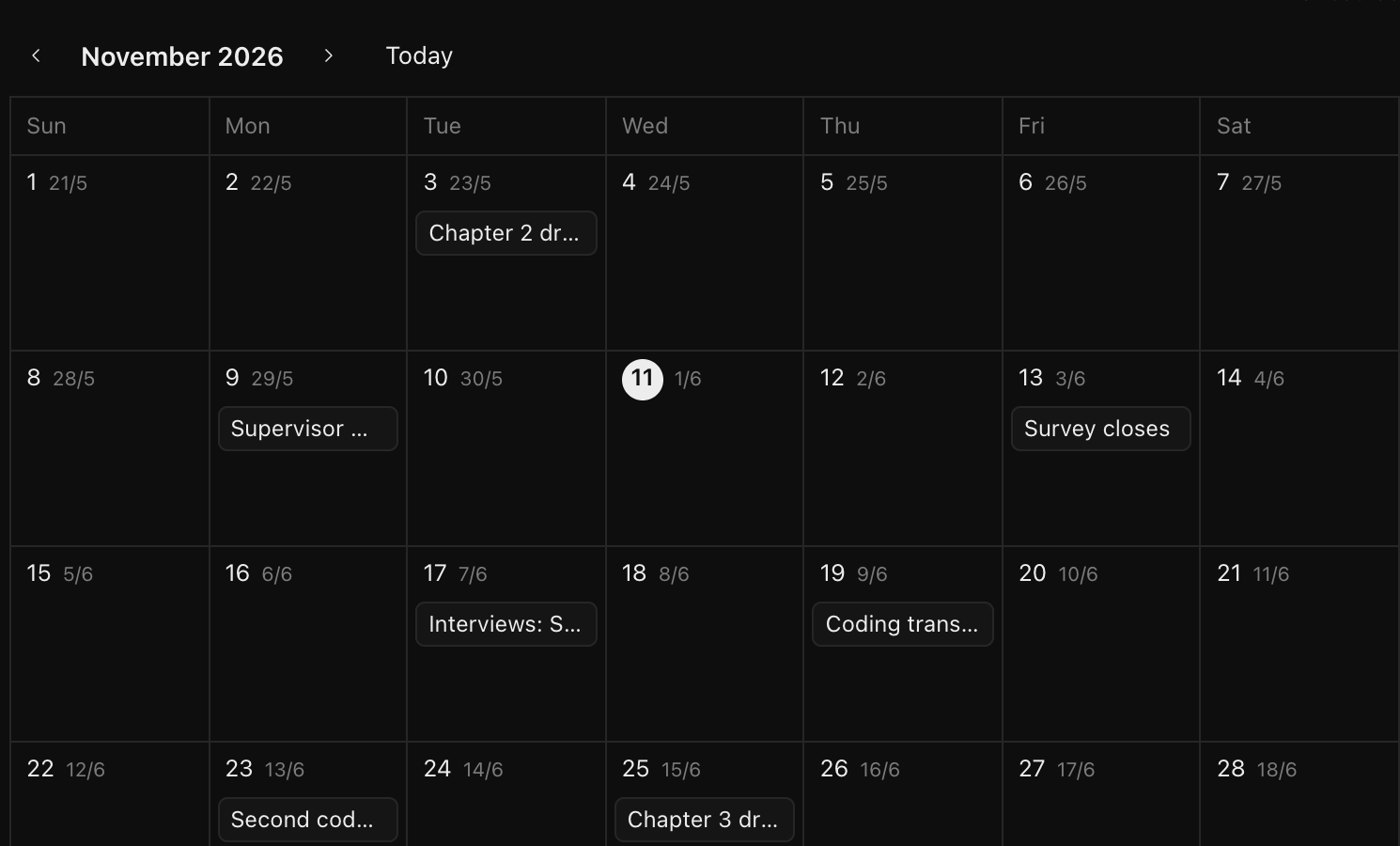
Every date shows its Hijri day beside the Gregorian, in calendars and tables.
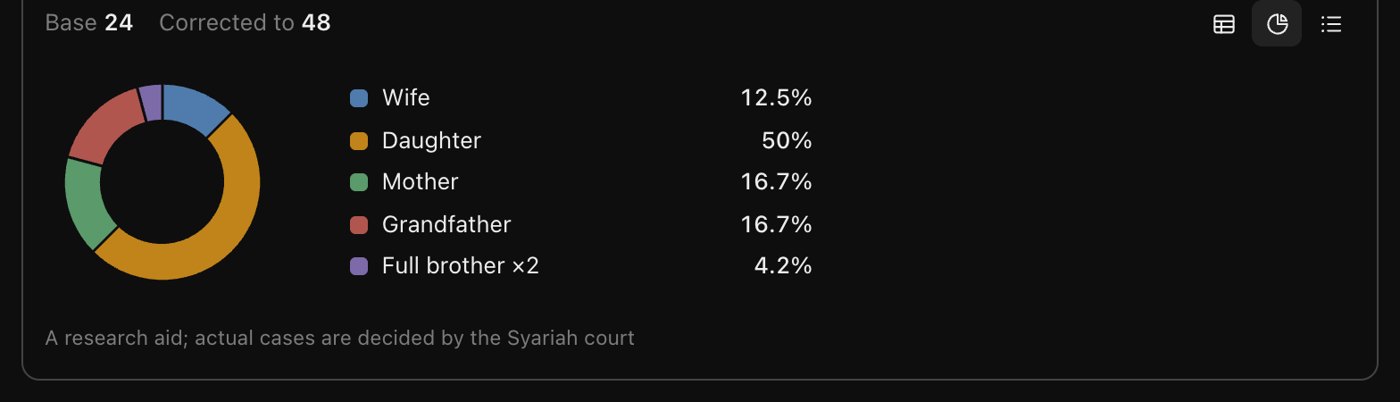
Each heir’s share as a chart, in four madhhabs, with the steps and their sources.
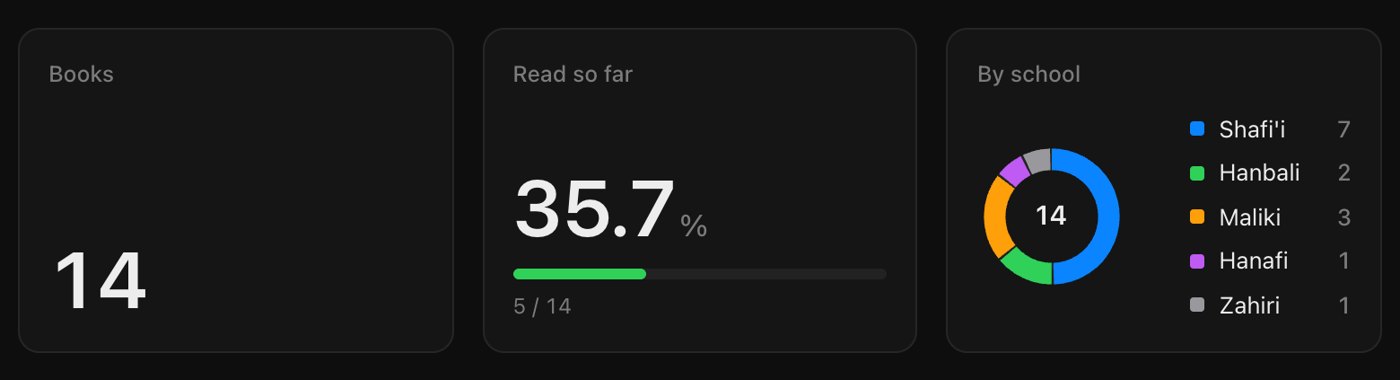
How much of your library you have read, and which schools it draws on.
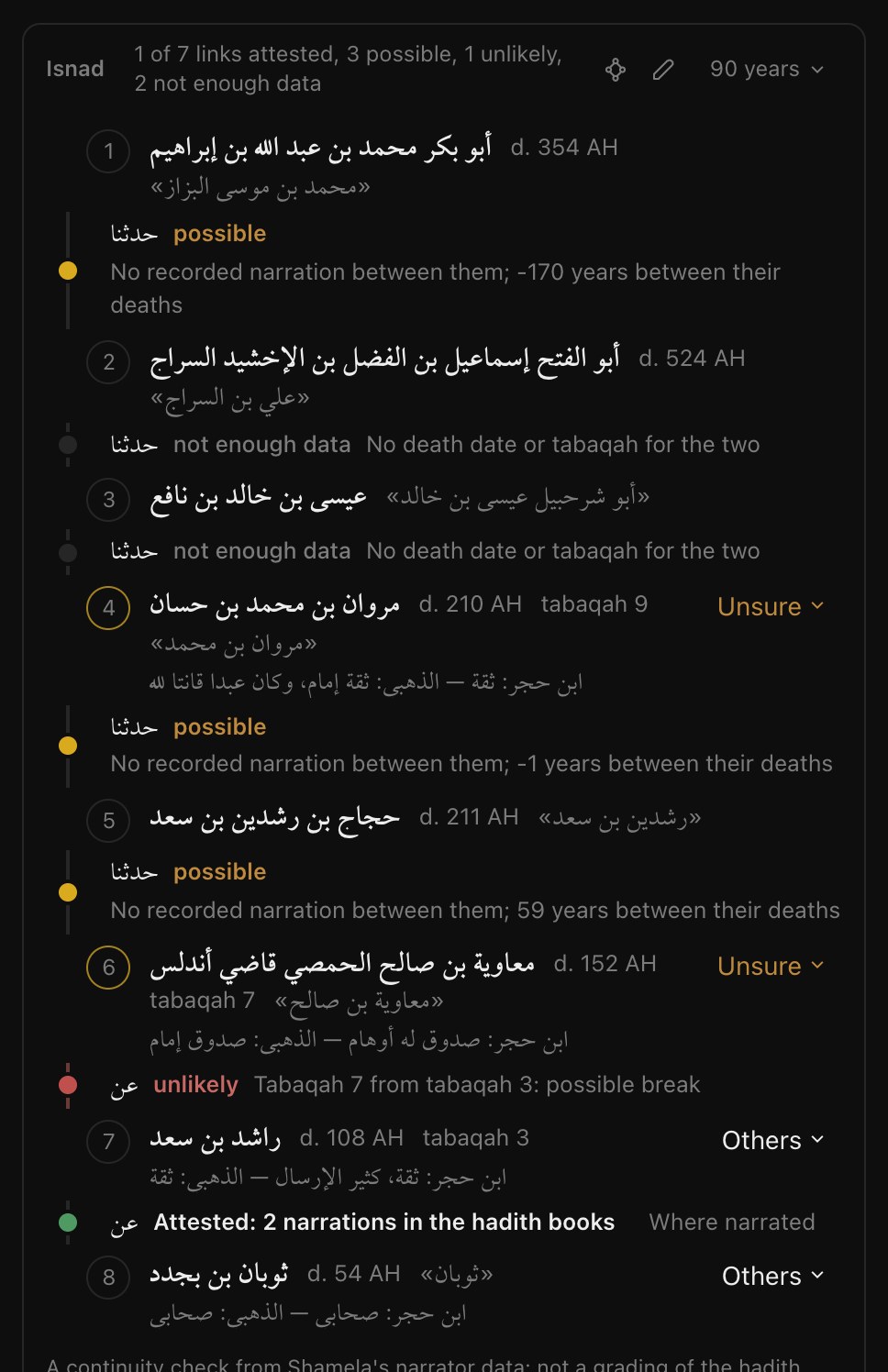
Each narrator is identified from Shamela’s narrator data; every link is marked attested, possible or unlikely.
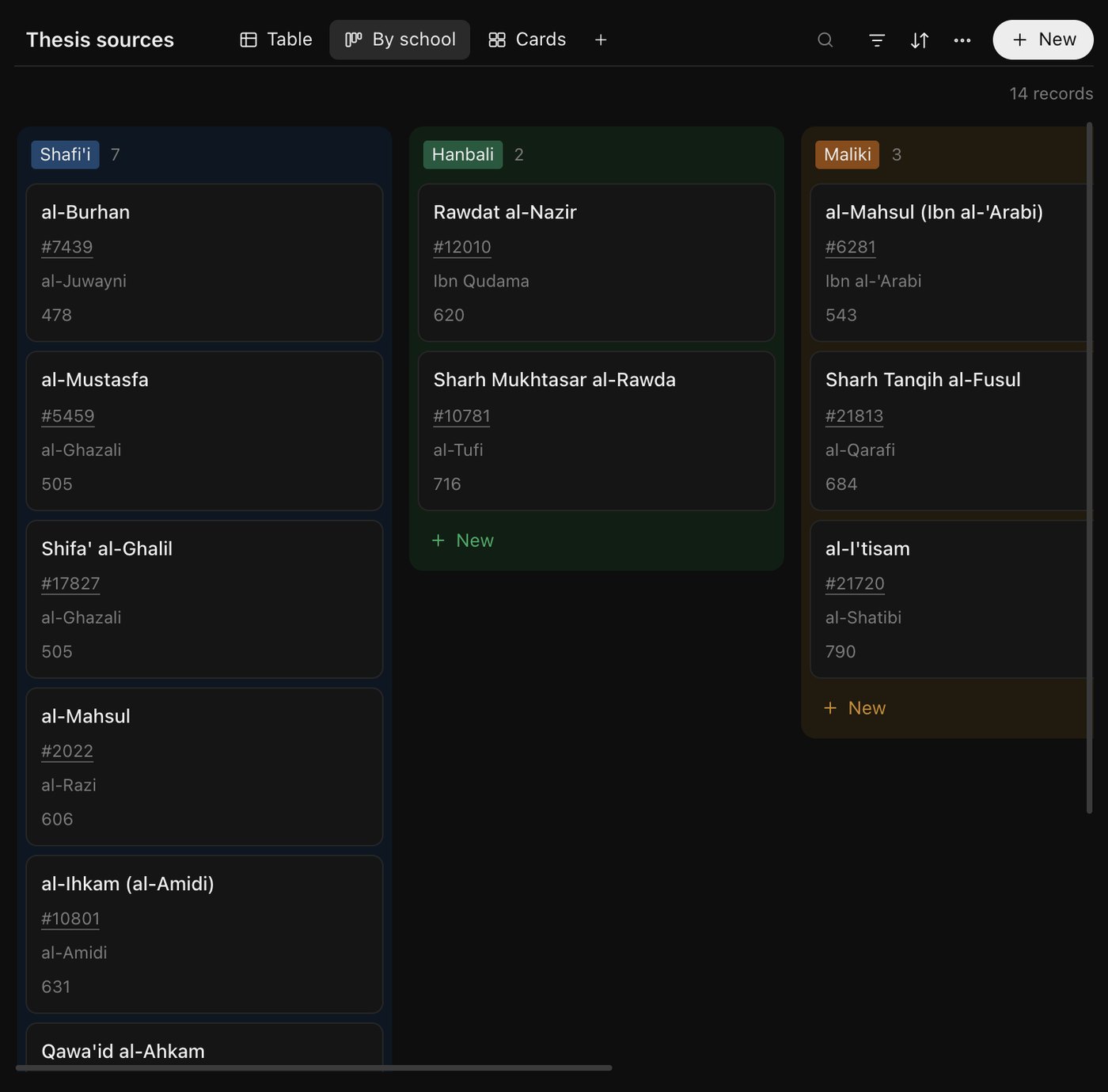
Group your sources by madhhab, century or reading status with a click.
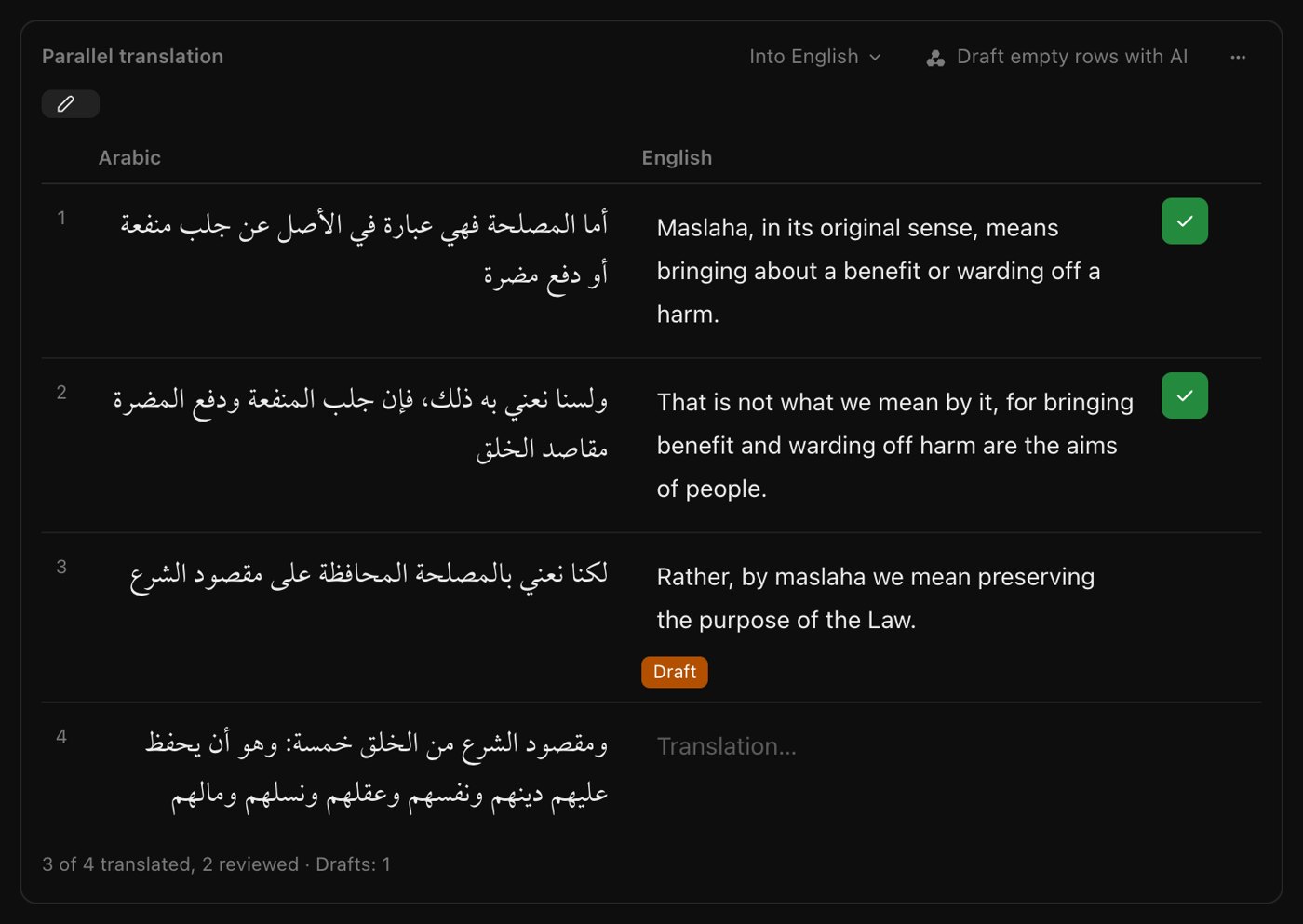
Sentence by sentence, with drafts marked until you review them.
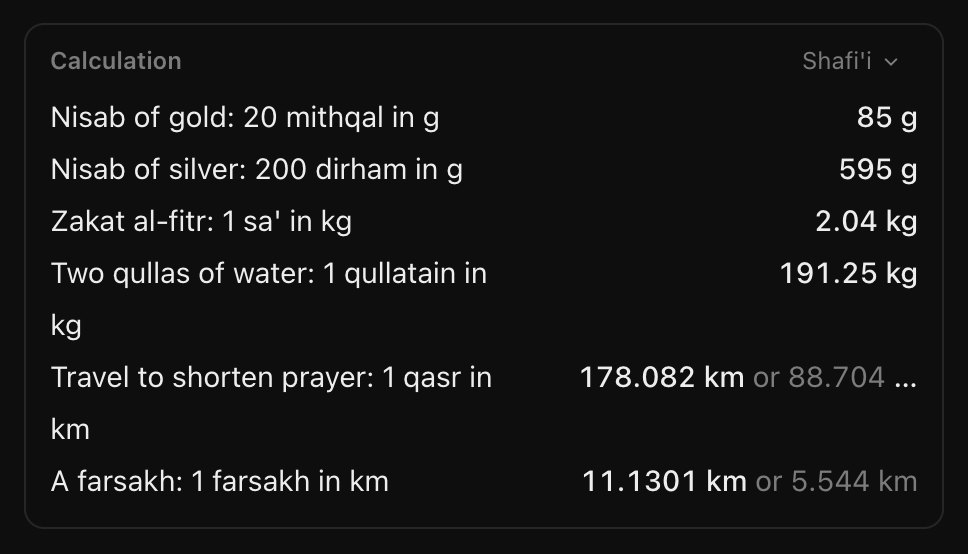
Mithqal, dirham, saʿ, qullatain and masafat al-qasr in grams, kilos and kilometres.
Yes. Pages, tables, forms and dashboards work on their own. The agent helps when you ask it, on the page you have open.
From the books in your installed Shamela library. Space ties each quotation to its book and page, so you can open the source in Shamela at any time.
On your computer, inside Shamela Agent. The agent uses your Claude or ChatGPT connection, just like the main chat.
Only when you ask. Every change it makes is saved as a version, so you can restore the page as it was.
It goes to Trash with the pages inside it, and you can restore it from there. It’s gone for good only when you empty the Trash.